10 November 2026 - Connecting the Digital Campus: Improving Engagement, Insight and Control

The benefits of a connected digital campus are well known: simpler access to services, less duplication, stronger governance and oversight, more useful insight, and more targeted communication.
The challenge for some universities is how to realise these benefits across an established digital estate without replacing core systems or adding further complexity.
A platform-led approach offers a practical solution. By bringing systems, data and communication together through a single access and integration layer, institutions can create a more coherent experience for students while improving control and flexibility for IT teams. The sections below explore this approach and how its benefits can be realised.
Why this matters for IT leadership
For your teams, this isn’t just about improving the student experience, it’s about improving how the digital estate is managed.
A more connected, platform-led approach can help institutions:
- Simplify the access layer without replacing core systems
- Reduce duplication across portals, apps and communication tools
- Improve governance and oversight of how services are accessed and used
- Create a more flexible architecture, where systems can evolve without disrupting the experience
The focus shifts from adding capability to making existing capability work more effectively together.
A more connected front door
One of the most immediate opportunities is simplifying how students access information.
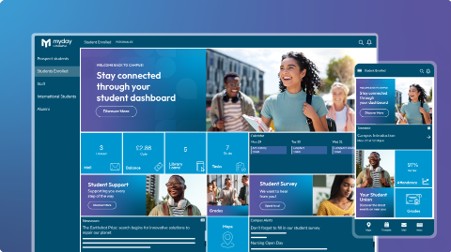
Rather than navigating multiple systems, platforms such as myday by PebblePad provide a single, mobile-first access layer - bringing together academic information, campus services and key updates in one place.
This doesn’t replace core systems. Instead, it sits across them, acting as an integration and access layer that connects existing infrastructure and surfaces what matters to the user, when it matters.
For IT teams, this approach reduces the need for multiple front-end touchpoints while maintaining control of the underlying systems.
The result is a clearer interaction model for users, and a more manageable, extensible architecture for IT leaders.
Turning activity into insight
Make data-driven decisions to support student success
Engagement data exists across the digital estate but it is often disconnected.
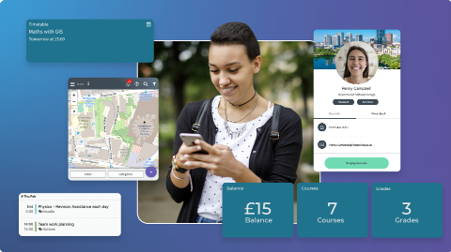
By aggregating data points such as attendance, system access and platform usage, institutions can begin to move beyond isolated reporting towards a more complete view of student engagement.
With analytics brought into a single layer, teams can:
- Monitor activity trends in near real-time
- Identify cohorts or individuals at risk earlier
- Understand how different systems and services are being used
This shift - from data collection to usable insight - is increasingly central to student success strategies.
Reducing complexity, not capability
For many IT leaders, the priority is not adding more systems but making better use of what already exists.
A platform approach helps rationalise the estate by acting as a central integration point - reducing the need for multiple, overlapping access routes and simplifying how services are delivered to end users.
This supports a more modular environment, where systems can evolve without disrupting the overall student experience.
Making communication more targeted
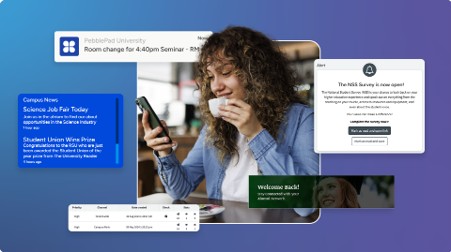
Reach every student, every time with effective, timely communications – delivered when and where it matters most.
Communication remains one of the most common pain points across institutions.
Messages are often distributed across multiple channels, making it harder to ensure visibility and relevance.
By centralising communication within a single platform, institutions can:
- Deliver targeted messages to specific groups
- Use consistent channels across web and mobile
- Measure engagement and refine approach over time
This enables a more controlled and effective communication strategy - focused on relevance rather than volume.
Where PebblePad fits
Within this broader approach, PebblePad and myday play complementary roles.
- PebblePad focuses on the academic journey -supporting learning, assessment, feedback and reflective practice
- myday supports the wider student experience - connecting individuals to information, systems and services across campus
Together, they provide a more joined-up digital ecosystem: linking learning, engagement and day-to-day university life in a way that is visible to both students and staff.
An example in practice
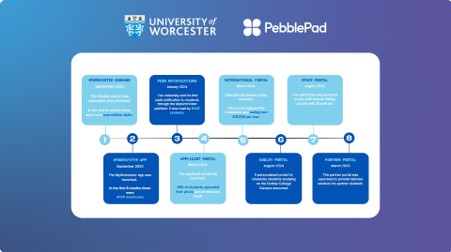
You might have recently joined our USICA webinar with the University of Worcester or caught up on the recording. If you missed it and you’re exploring how this approach is being applied in a live environment, this short clip captures the University of Worcester’s experience of driving engagement at scale:
Watch: 1M visits and a new way to engage students
Or you can watch the full recording here
A shift in approach
What’s emerging across the sector is not a move towards more systems but towards better-connected ones.
For IT leaders, that means focusing on:
- Integration over replacement
- Visibility over volume of data
- Experience alongside infrastructure
A platform-led approach offers a pragmatic way to align these priorities - supporting both institutional efficiency and a more coherent student experience.
Find out more
If you’d like to explore how this approach could support your institution or see how myday and PebblePad are being used across the sector, our team would be happy to help.
Get in touch or speak to one of our experts to continue the conversation

